
Thank You for Your Attention on CUMIC!

Steel sheet piles may not grab attention on a finished project, but they are often what makes everything else possible —from stabilizing deep urban excavations to forming quay walls in major ports. In this guide, we take a practical look at the main steel sheet pile profile types, where sheet piling is most commonly used, and the steel grades typically specified on real projects, offering a clear snapshot of how steel sheet piling supports modern construction projects.
Steel sheet piles are available in several profile types, each developed to meet specific structural and construction needs:
1. Z-Type Steel Sheet Piles
Z-shaped cross-sections with interlocks at the edges. Designed to efficiently resist high bending forces, they are commonly used in heavy-duty and permanent retaining structures.
2. U-Type Steel Sheet Piles
U-shaped profiles with centrally located interlocks. They form stable, symmetrical walls and are widely used in both temporary and permanent works.
3. Straight Web (Flat) Sheet Piles
Flat or lightly curved profiles with strong interlocks. They are mainly used for circular or cellular structures where stability relies on geometry and interlock tension rather than bending resistance.
4. Combined Wall Systems (Combi-Walls)
Hybrid systems that combine large primary piles with sheet pile infill panels, providing very high stiffness and load capacity for demanding projects.
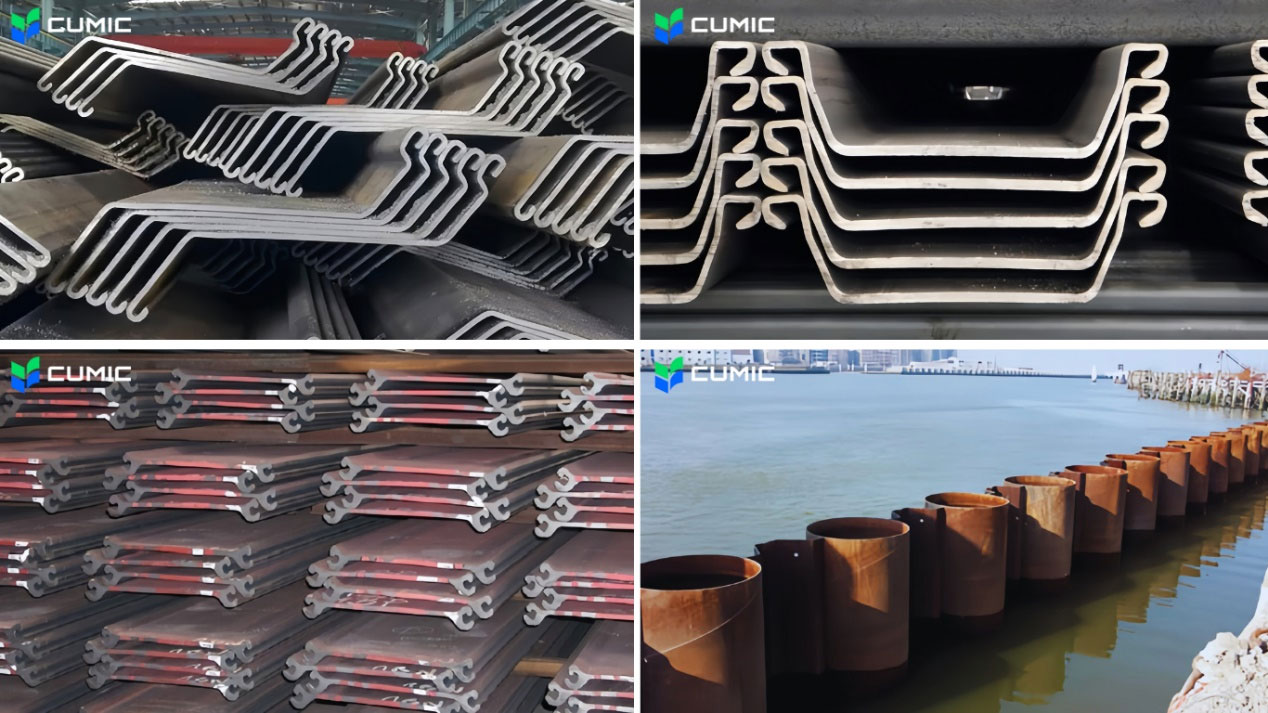
1. Ports, Harbors, and Marine Infrastructure
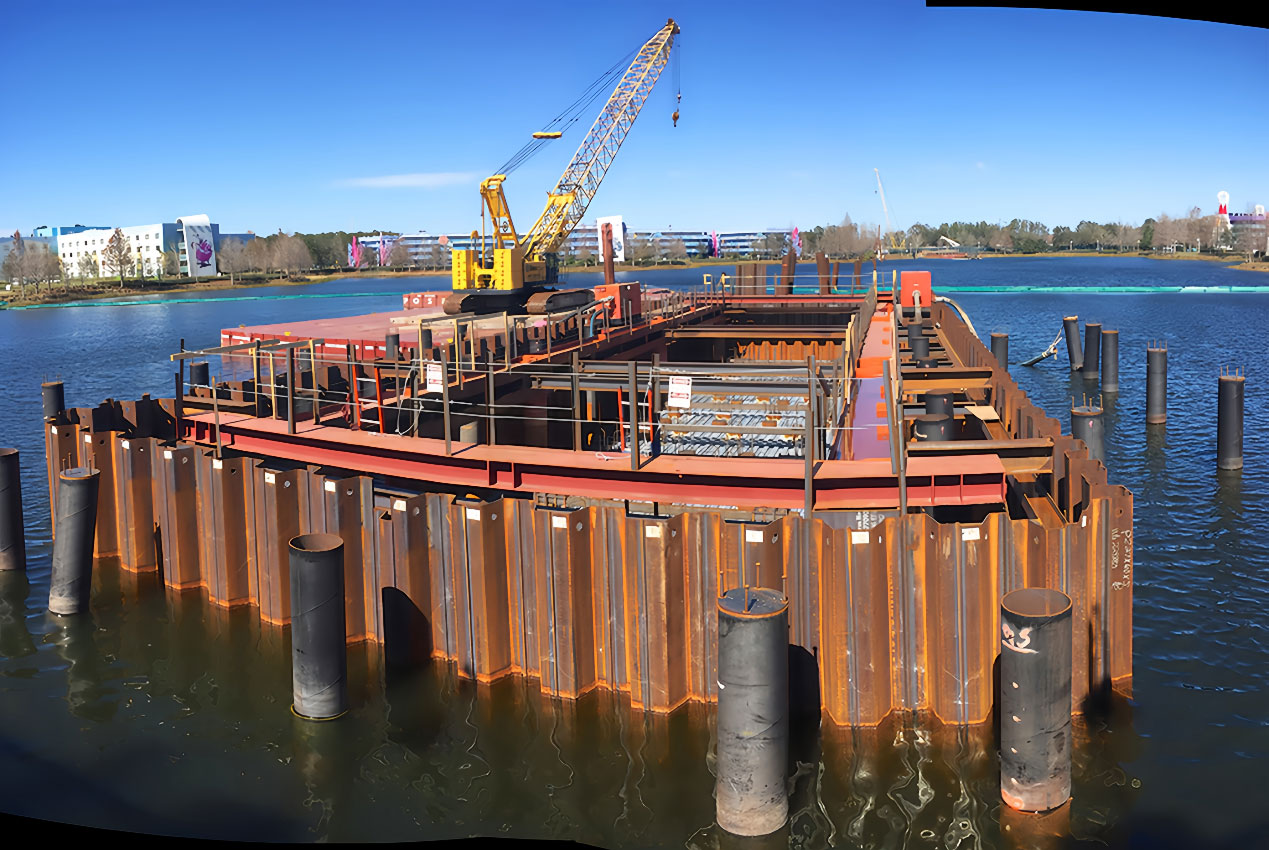
Steel sheet piling is a core structural solution in ports, container terminals, quay walls, shipyards, and bulk cargo facilities. These projects demand walls that can support deep-water berths, container cranes, heavy pavement loads, and constant operational stress. Sheet pile systems deliver the required strength and durability while allowing relatively slender wall designs in space-constrained waterfront environments.
2. Flood Protection, Coastal Defense, and Water Control
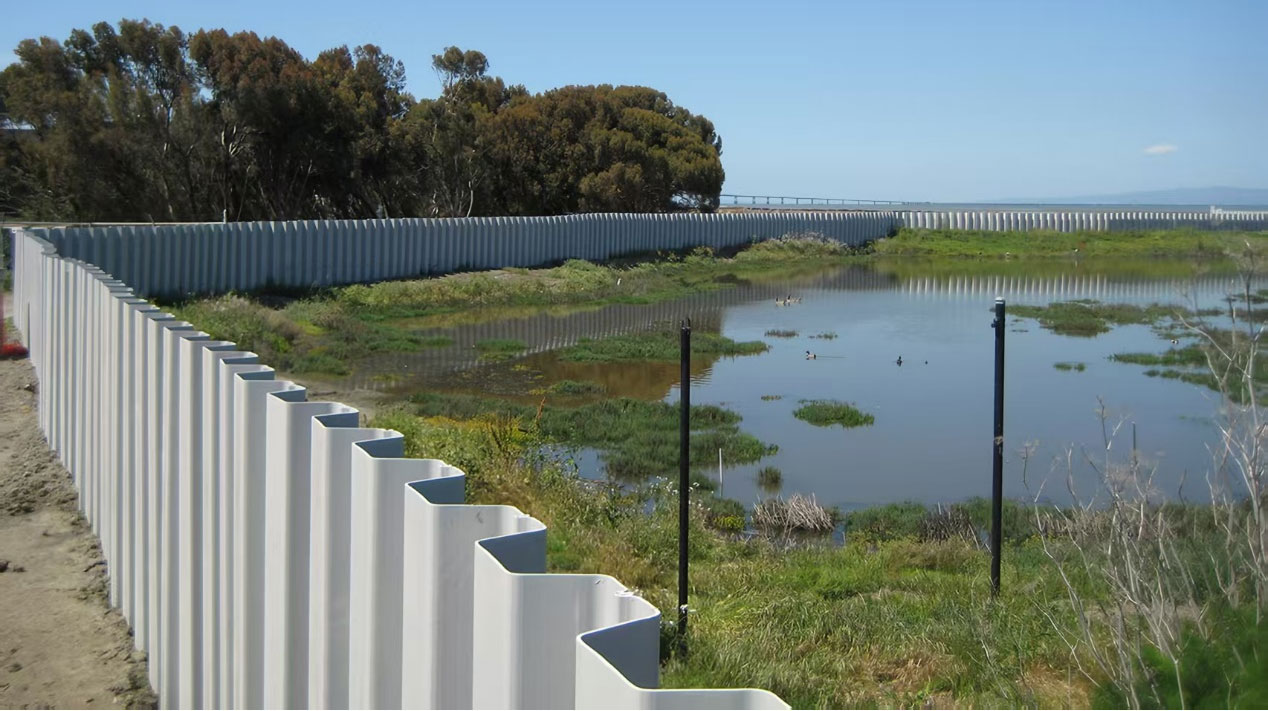
Sheet piling plays a key role in floodwalls, levees, coastal defense systems, and seepage cutoff walls. These structures help manage water flow, prevent erosion, and protect urban and coastal areas during extreme weather events. They are particularly effective where space limitations or existing infrastructure restrict the use of wide earth embankments.
3. Urban Infrastructure, Bridges, and Hydraulic Structures
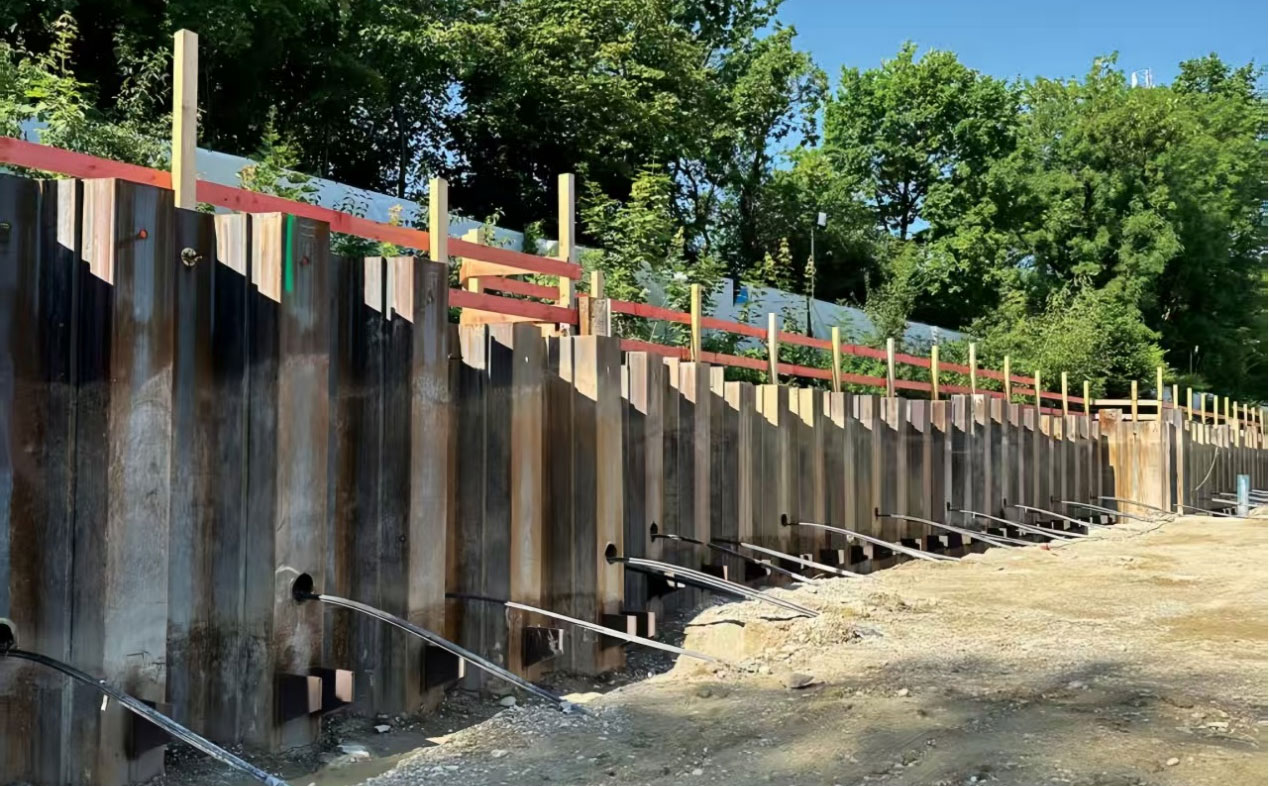
In dense urban environments, sheet piles support deep excavations for basements, underground parking, subway stations, and utility corridors. Anchored, braced, circular, or cellular sheet pile systems enable safe and efficient construction in confined or water-covered sites.
Steel sheet piles are typically produced from structural steels that balance strength, ductility, and weldability. The grades specified depend on design loads, wall height, durability requirements, and regional standards.
Standard | Common Grades | Typical Use & Notes |
EN 10248 | S235GP | Light-duty retaining structures and temporary works |
S275GP | Medium-duty retaining walls and general civil engineering | |
S355GP | Heavy-duty and permanent structures requiring higher strength | |
ASTM | ASTM A328 | Dedicated sheet piling specification |
ASTM A572 Grade 50 | Higher-strength applications requiring increased load capacity | |
JIS | SY295 | General sheet pile applications |
SY390 | Heavy-duty and high retaining walls |
At CUMIC, we support infrastructure, marine, and energy projects with a full range of steel materials—from sheet piles and structural sections to plates and processed steel—sourced from trusted mills worldwide. With integrated services covering global sourcing, technical coordination, logistics management, and quality control, we help ensure your steel materials align with design requirements, delivery schedules, and long-term project performance.
Explore our sheet pile supply to Colombia Metro Line to see how steel sheet piling is applied in real-world projects, or contact our technical team to discuss the most suitable solution for your next construction challenge.